Heat rises. In a house that lacks adequate attic insulation and air sealing, warm air produced by heating systems migrates upward, passing through the ceiling assembly and into the attic before escaping through ventilation gaps to the outdoors. This process — driven by the stack effect and the buoyancy of warm air — can be one of the most significant sources of heating energy waste in a Canadian home, particularly in older construction where the attic floor may have no insulation at all or insulation that has settled and compacted over decades.
The attic is also where addressing air leakage has the greatest return relative to effort. Sealing the pathways through which warm air escapes from the living space into the attic is often more impactful than adding additional insulation over existing material — because the insulation itself does nothing to stop air movement, only bulk heat conduction.
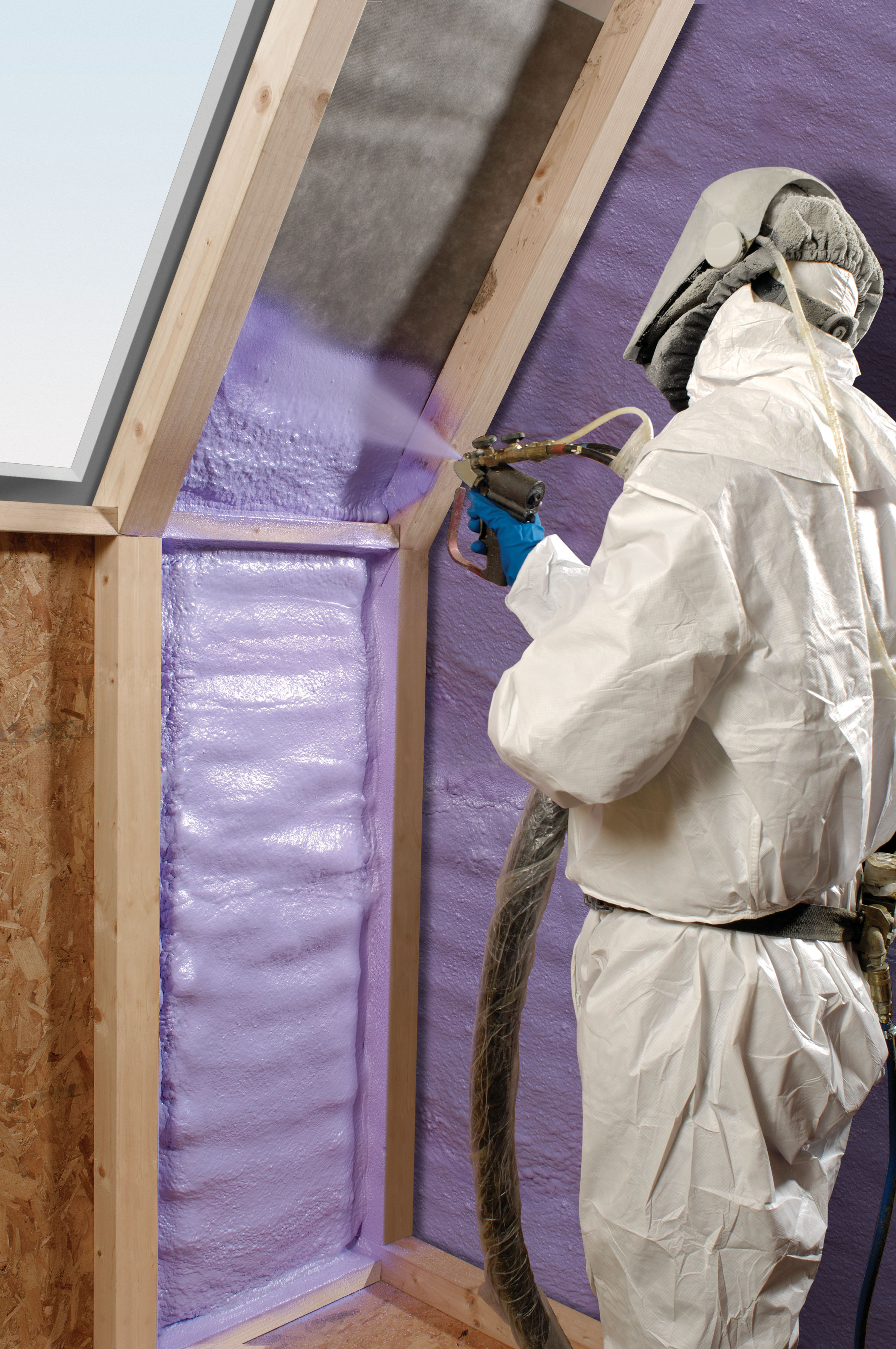
The Attic Floor as the Thermal Boundary
In a conventionally framed house with a vented attic, the thermal boundary — the plane separating conditioned from unconditioned space — is the attic floor, not the roof. This distinction matters because insulation should be concentrated at the attic floor, not the roof deck. Insulating the roof deck creates an unvented attic assembly, which has specific requirements and is a different design altogether.
The attic floor consists of the ceiling joists, the ceiling finish (typically drywall), and whatever insulation sits between and above the joists. In many homes built before the 1980s, this may be 100mm (4 inches) of fiberglass or mineral wool — representing R-13 or less. The National Energy Code of Canada and provincial building codes now specify substantially higher levels, with many zones requiring effective insulation in the range of R-40 to R-60 at the attic floor.
Air Sealing Before Adding Insulation
The most important preparatory step before adding insulation to an attic floor is identifying and sealing the pathways through which air moves from the living space into the attic. These include:
- Plumbing stacks and vents passing through the ceiling
- Electrical boxes, light fixtures, and ceiling fan mounts
- Gaps at the top of interior partition walls (particularly in balloon-framed construction)
- Hatch surrounds and pull-down stair frames
- Gaps around chimneys and masonry elements
- HVAC ducts and exhaust fan housings penetrating the ceiling plane
Each of these penetrations creates a pathway for warm, moist interior air to enter the attic. The temperature differential between the living space and the vented attic in winter drives this flow continuously. Even small gaps — around electrical boxes, for instance — can carry significant heat and moisture when multiplied across dozens of openings in a typical house.
Spray foam in a can (commonly sold as "one-component polyurethane foam") is the most effective sealant for most penetrations because it expands to fill irregular gaps and adheres to multiple substrate types. For gaps around chimneys, fire-rated caulk and metal flashing are required rather than foam because of proximity to combustion sources.
Insulation Materials for Attic Floors
Once air sealing is complete, additional insulation can be added. The choice of material depends largely on access, existing insulation depth, and whether the work is self-performed or contracted.
Blown Fiberglass and Mineral Wool
Blown loose-fill insulation is the standard approach for attic floors in Canadian retrofits. Both fiberglass and mineral wool (rock wool or slag wool) are available as loose fill. They can be installed to any depth needed to achieve the target R-value, regardless of joist depth, because they simply accumulate on top of existing insulation and framing.
Fiberglass loose fill achieves approximately R-2.2 to R-2.7 per inch of installed depth, depending on settled density. Mineral wool loose fill is in the R-2.8 to R-3.3 per inch range. To reach R-60 with blown fiberglass, approximately 550–680mm (22–27 inches) of material is required. Maintaining this depth uniformly across the attic floor, including at the eaves where headroom is limited, is one of the practical challenges of deep attic insulation projects.
Blown Cellulose
Cellulose performs similarly to mineral wool in terms of R-value per inch (approximately R-3.2 to R-3.8) and has the added property of settling into irregularities in the attic floor more completely than fiberglass. It is produced largely from recycled newsprint and is treated with borate compounds for fire and mould resistance. In very deep applications — reaching R-60 or beyond — the weight of settled cellulose may need to be considered relative to the ceiling structure below.
Ventilation Requirements in Vented Attics
A vented attic must maintain airflow through the assembly year-round to remove moisture that enters from below and to keep the roof deck cold enough in winter to prevent ice damming. Canadian building codes prescribe minimum net free ventilation area relative to ceiling area — typically 1/300 of the ceiling area when both high and low ventilation is provided, or 1/150 when only one type is available.
Adding insulation to the attic floor must not block the ventilation pathways at the eaves. Baffles — cardboard, rigid foam, or polypropylene channels — are installed in each rafter bay from the soffit to a point above the expected final insulation depth. These ensure that outside air entering through soffit vents can travel up the roof slope unimpeded while the attic floor is insulated to full depth.
Failure to maintain this airflow path leads to condensation on the underside of the roof deck, frost accumulation in cold weather, and ice damming at the eaves when the roof deck above the warm attic space heats unevenly.
The Attic Hatch
The attic access hatch is frequently overlooked. In many homes it consists of a thin piece of drywall or plywood with no insulation and inadequate sealing around the frame. Replacing the hatch with an insulated panel — or adding rigid foam to the back of the existing hatch — and installing weatherstripping around the frame can reduce what is, in thermal terms, a very poorly insulated opening to a level approaching the surrounding assembly.
Pull-down stair units are a larger challenge because they incorporate a large moving frame that creates both infiltration and conduction pathways. Purpose-built insulating covers for pull-down stairs are available and address the air sealing problem even if they add inconvenience to attic access.
Ice Damming as a Diagnostic Signal
Ice dams — ridges of ice that form at the roof edge and can cause water to back up under shingles — are a visible symptom of attic heat loss in snowy climates. They form when heat escaping from the house warms the roof deck above the living space, melting snow that then re-freezes at the cold eaves. Consistent ice damming over multiple winters is a reliable indicator that the attic floor either lacks sufficient insulation, has inadequate air sealing, or both.
Correcting the thermal and air sealing conditions in the attic is the durable solution. Mechanical ice removal, heat cables at the eaves, or improved ventilation may reduce ice damming as temporary measures but do not address the underlying heat loss.